Right now I’m contemplating Thanksgiving plans and what to do for Christmas, as tiring as that sounds in the middle of the Fall chaos of kid activities. The Christmas decorations are going up on Veteran’s Day and I need to start planning our holiday menus. I can’t believe we are squarely in this season.
On Halloween, I went to my youngest’s costume parade at school. He told me not to come, that he had second thoughts about his hotdog costume and didn’t want to dress up anymore. I told him “Listen here, Buddy. I’ve got two more costume parades in my parenting career and that’s it. You will be in that parade.” He had no response.
I arrived a few minutes after it started, knowing that it is always youngest to oldest in the order of the parade, and he’s now one of the oldest. My baby. It seems impossible. I didn’t know what to expect—whether he would or wouldn’t put on the costume, after all, he has strong opinions he isn’t afraid to stick to—but there he was sitting with his friends, dressed as a hotdog, high-fiving the younger kids as they passed by, hooting and hollering and having a blast. He didn’t see me until it was his turn to parade around the school circle and I called out his name. He flashed a big smile before resuming his attention back on the outstretched hands wanting high-fives from the upper graders. Hotdog celebrity status. When he went back to his spot on the blacktop, I saw him scan the crowd until he spotted me. He gave me his trademark happy grin and waved, making a heart with his fingers. I knew at that moment that it was important for me to be there, to show up for him, no matter what.
I waved goodbye to him so I could return to work, happy I could see him, happy he could see me, happy my kid is happy and well-adjusted and healthy. I’ve seen a million other outcomes for lesser reasons. I’ve spent the past 9 years wondering if their father’s death would irreparably damage my children, but in raising them, I know and feel that growth happens around scars and happiness can prevail, and it feels like we might have escaped a darker fate. Of course I can only speak for now. I am grateful.
As I walked back to my car, I counted: one more left. One more Halloween parade. This number sits with me, heavy in my mind.
The days are long, but the years are short.
I’ve also taken to this kind of parenting math for other plans. Like, do we, or do we not go on a summer vacation this year? Kid #1 has 2 more summers before college. Kid #2 has 5. It’s like mom math for those of us inching toward an empty nest as we analyze our opportunity cost. Of course I like to believe in a world where my adult children will still see me frequently and want to travel with me, but I’m an observer. I’ve been watching my older friends and relatives go through the motions with their own kids. I saw a statistic once that 80% of the time we will spend with our children is before they are 18. And I believe all of it, because just yesterday they were babies and toddlers, and no matter how long the days felt in the moment, I blinked and years flew by. Soon I will lose them to the natural order of things.
So I steel myself for what is next while still trying to enjoy what we have right now. Or maybe that’s not exactly right. I suppose it’s more doing what I’m doing right now, because I know what comes next. Savoring, not clinging.
Change is good. This is what I tell myself, anyway. And it is, in its own bittersweet way. As much as I would like to shrink my kids into babies again and carry them around in an Ergo carrier on my back, they continue to evolve into interesting people with their own personalities, interests, and gifts. I heard pediatrician Michael Milobsky on Instagram say that parents need to be shepherds and not engineers. A shepherd herds, tends, and guards. An engineer designs, builds, and maintains. So often we want to control. We want to take over the wheel when it isn’t our car. When my husband passed away, it was my ultimate goal to give the kids their childhoods despite the circumstances. Idyllic childhoods, or close to this dream as possible. I don’t hide the heaviness of the world from them, but I do everything I can to let them be carefree children. Herd, tend, guard.
(And no, I don’t mean this in any Biblical way. I believe this responsibility belongs to all of us.)
I was never a sporty girl. Never played other than summer baseball in the park back when they funded programs for the youth during the times of the dinosaurs. Now I spend my weekends going to 3 games on Saturday and 2 on Sunday, hitting lessons, taking skates to be sharpened, dropping off and picking up all day everyday, washing, packing snacks, strategically planning the rest of our lives wedged between practices and games. I never envisioned this life for us and I’m not even sure that my husband would have approved, but here we are. It wasn’t my plan. They chose. I herd, tend, guard.
We enjoyed the World Series this year, and my daughter—who plays softball—was particularly interested in the details. Ohtani’s foot jumping off second on his attempted steal, the great catches that sealed the fate of the game, hitting, pitching, good calls and bad calls. I thought about how sports, band,mock trial, choir, theater, whatever is so important to learning the game of life that everyone needs *something* in their formative years. In these activities we learn that even superstar athletes have bad games. That sometimes being a great team like the Blue Jays doesn’t get you the win, and that there are causes and conditions that add a level of randomness, making it impossible to fully control the outcomes of life, but that we can do our best in how we show up. These experiences help us refine *how* we show up.
Some of these great athletes on the Dodgers have experienced tragedy, like Freeman losing his mom at 10 to melanoma, or Roki losing his father and grandparents to the 2011 earthquake and tsunami in Japan. I remember watching the news coverage of the earthquake in 2011 with my husband and father-in-law, and how sad my father-in-law was that his family farm in Japan got wiped out by flooding from the tsunami. I never thought 14 years later they would be gone, and I’d be watching a little kid who emerged from that tragedy grow up to be a 100 mph pitcher, playing on our local team in one of the greatest World Series.
I think that we need more of this. Stories of resilience. Stories of great people doing great things despite the broken pieces in their lives. Stories of effort, discipline, and leaning into and respecting the process. Proof that healing and growth happens around the jagged edges of loss.
I’ve recently sat in meetings about redesigning our schools. I wear both the teacher hat and the parent hat, currently having kids at elementary school, junior high, and high school. I’ve been teaching for 22 years, and the shifts have been drastic since I started. We took attendance by hand when I was a new teacher. Now we are bracing for the tidal wave of AI and how it will redefine learning and schools. Our task at these meetings is exploring how to make school better for kids. How to make kids want to attend school when they no longer find it necessary.
I often remark to my colleagues that we are on the frontlines of societal decay. When poverty worsens, we’re one of the first to feel it. For years, even before COVID, we’ve watched our students become more depressed, anxious, and isolated. Kids today are less likely to date and go out with friends. As screentime has skyrocketed for them, face-to-face interactions have plummeted. Some experts are calling the loneliness and isolation trends of our youth an epidemic, and apparently, for men, it’s an even more dangerous threat with serious social implications.
I see it in the classroom, sure. But I also know that the root causes are beyond what we can put a bandage on in our schools; parenting is changing. I can’t quite put my finger on it, but just as there is a class system with economic resources, there is a class system with parenting, and they are typically interconnected: people with parents who can provide an emotionally stable home with loving guidance and support and physical presence, those who can not, and everything in between. It feels more and more like the public is relying on schools to fix home life problems and parent these children while simultaneously losing the right to discipline these same children in schools. We battle with the typical roadblocks of underfunding, lack of training, and burnout. It can feel hopeless if everyone on the team isn’t on the same page.
I can’t imagine expecting anyone else to parent my children, but I also understand and feel so grateful for the things that we have in my home that not everyone has. I don’t need their help, and that’s privilege. Sometimes I feel like I’m running a marathon with one leg having a deceased husband not around to help me, but at the same time I also think I have it handled. I’m grateful. That gratitude tells me that I likely need to do more for others, because I have benefited from so much to be where I am today. I think about my responsibility in the classroom, but also a mom in the community who interacts with other people’s kids in various capacities. Herd, tend, guard.
I read an interesting book recently by James Patterson and Patrick Leddin called Disrupt Everything. They talk about disruption being important, versus what we probably would initially assume is that disruption is bad, counterproductive, problematic, dreaded, maybe even a nuisance. However, they distinguish between negative disruptors and positive disruptors. Have you ever sat in a meeting, and the usual suspects do nothing but ask questions and make comments to derail the momentum of the meeting? They are the first to complain about change, the first to nitpick the details, and the last to offer solutions and ideas? And then there are the people who are willing to deviate from the status quo, who offer innovation and are willing to stick their necks out to try new things and, in the process, willing to make mistakes. When they fall, they get up, dust themselves off, reflect, and try again. The authors of the book suggest that positive disruptors should go through these phases: disruption, discernment, behavior, achievement, and refinement. These kinds of disruptors are important to society; they are our innovators.
Evolutionarily speaking, going with the flow, staying with the herd, it’s in our bones. We tend to shun the disruptors, good or bad ones. Our instincts are to not make social waves. It’s how we survived. However, it is the disruptors who have advanced civilization. And sadly, also the disruptors that can harm society.
The teams we find ourselves on throughout our lives need positive disruptors. We have to fight the status quo and we can’t become complacent about current reality.
I watched the Jane Goodall interview in October. It was released on Netflix after she passed away at the age of 91 on October 1st. She filmed it in March of 2025 but it was stipulated that it would not air until after she passed away. Jane was nice. Too nice. I didn’t find anything particularly controversial about what she said, other than one small part you might have seen floating around on the internet because she names political and public leaders who she didn’t like. However, the majority of her message was about hope, conservation, and action. She talks about not giving up on making this world a better place, especially for the youth. Jane died in the middle of a speaking tour. Jane was a disruptor.
I’ve heard people lament that everything feels hopeless. Too much suffering. Too rigged. Corruption and greed is rampant. What’s the point?
Some people don’t want to look at other people’s suffering because it feels too painful and they already have too many reasons to feel bad. They’d rather look away for their own self-preservation.
Jane is one of my heros, because she died fighting the fight, not with aggression, like the chimpanzees she lovingly studied throughout her life, but in gentle ways: a steadfast belief in the power of hope, a belief in the general good of people, through storytelling, education, and a commitment to keep taking the next step toward positive change.
I’ve found that helping others has had a healing effect on my own well being. A number of studies have shown a link between volunteering and improved health and wellness, with the effects being reduced depression, anxiety, and stress, increased well-being and happiness, cognitive benefits, reduced mortality risk, and enhanced social connections.
Jane didn’t say this, but there are real health implications—both body and mind—for people who help each other out, and in a negative way, for those who isolate. We’re innately social beings. As much as that “go with the flow” and stay with the pack part of our biology can be bad, it also can be amazingly good.
According to the book Disrupt Everything, positive disruptors develop their communities. They network, nurture relationships, are mindful of their network of acquaintances, host gatherings, and socialize. It is a priority in how they live.
In other words, positive disruptors know we are better together. Our fates are interconnected and we accomplish more in groups. We are not meant to shrivel up and expire in isolation.
All of this to say: I think the answer is connection.
Connection with your kids.
At work.
At school.
Join organizations.
Volunteer.
Host social gatherings. Apparently new data shows Americans spending 50% less time at parties than they did in the past, negatively impacting happiness. I know I don’t host parties like I used to.
Talk to humans. Find reasons to chit chat with random people.
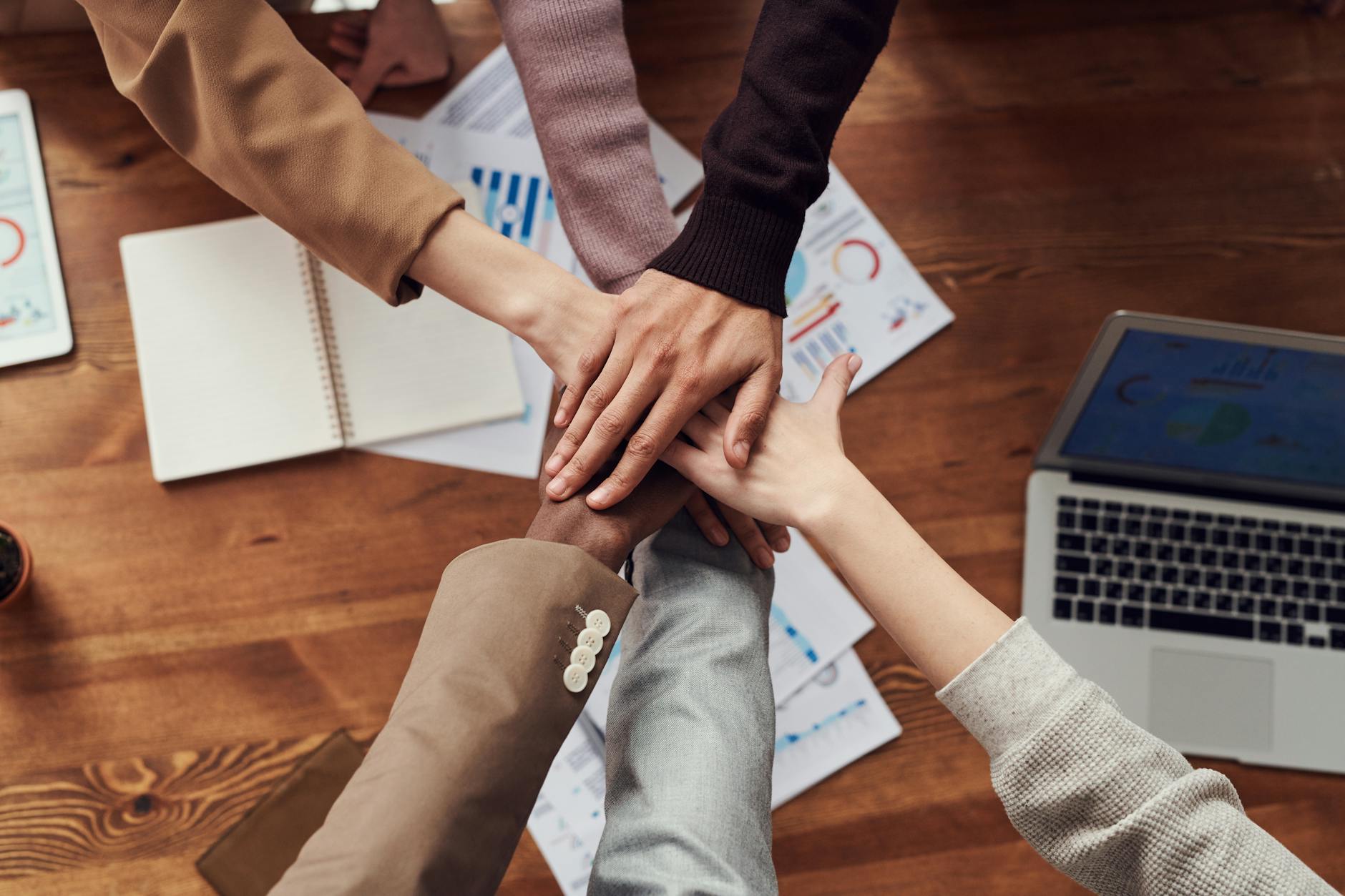
It feels like teambuilding 101, yet another great example from sports even from my nerdy, non-sporty perspective. If life is anything like the games that we like to play and watch, we need better team building skills. In a world that is increasingly operating in silos—neighborhood silos, work silos, family silos—it’s easy to forget the teams we are part of, from where we work, play, and live. It’s also incredibly easy to write people off as not on your team. Jane Goodall reminded us that we each have a role to play on this planet. What we do matters, even the tiniest of actions. I can’t help but think that the answer to a lot of our world problems is to start acting like we’re on the same team.
So that’s what I’m wondering as we get closer to the end of another year: how to be a better team member in all facets of my life. How to help my kids be better team members. How to show up for others in this crazy world. In a world where we attempt to engineer our life experiences, how can we move through life as a shepherd for all, not just our loved ones? Herd, tend, guard.
*****************
Couple other things going on:
👉Recent dharma talk I gave, Empty Seats, Full Hearts.
🪷This year I had an essay printed in Lion’s Roar.
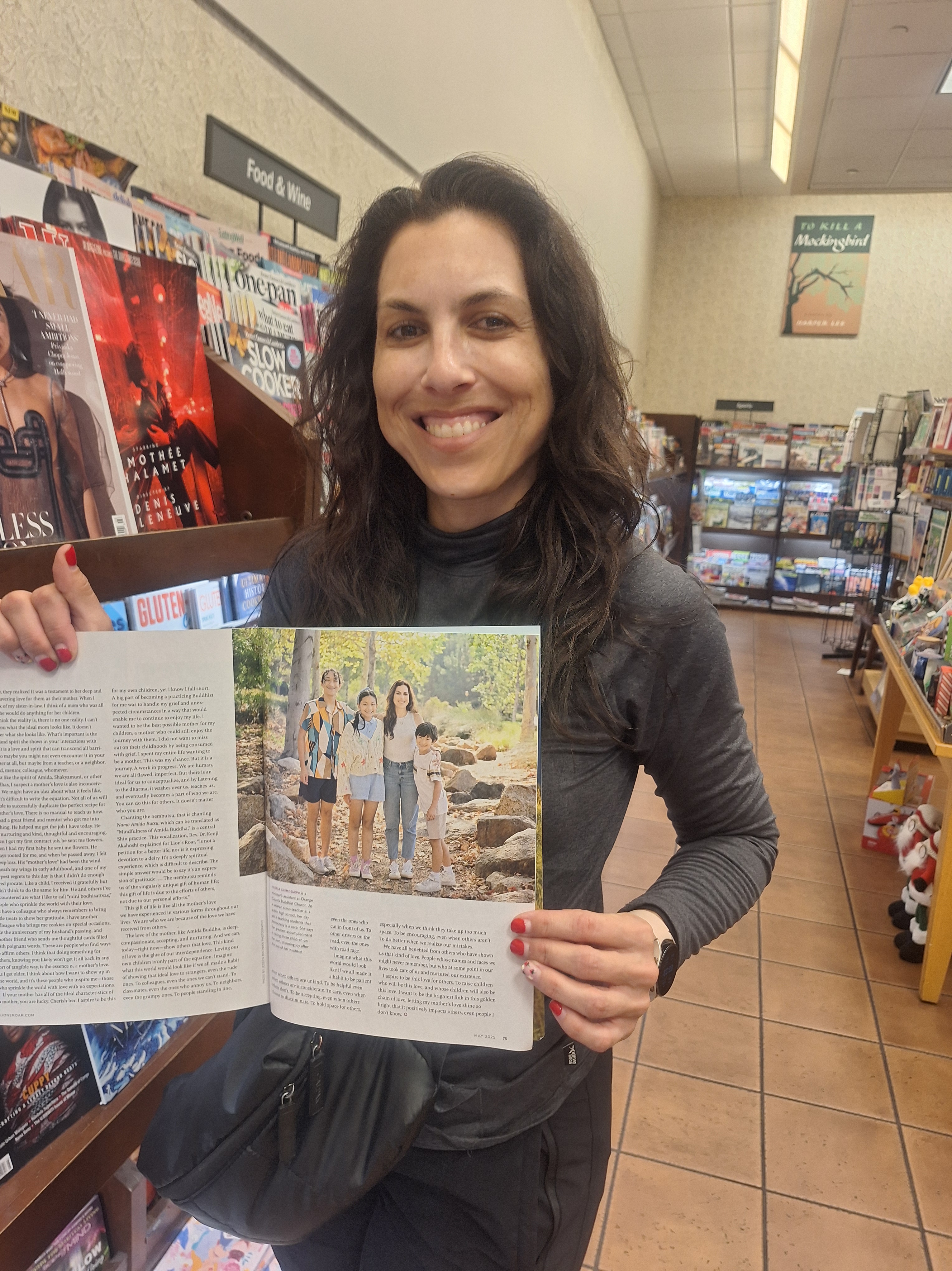
And a recent pic of my family:

Thank you for making it this far. I appreciate you!

 Teresa Shimogawa